
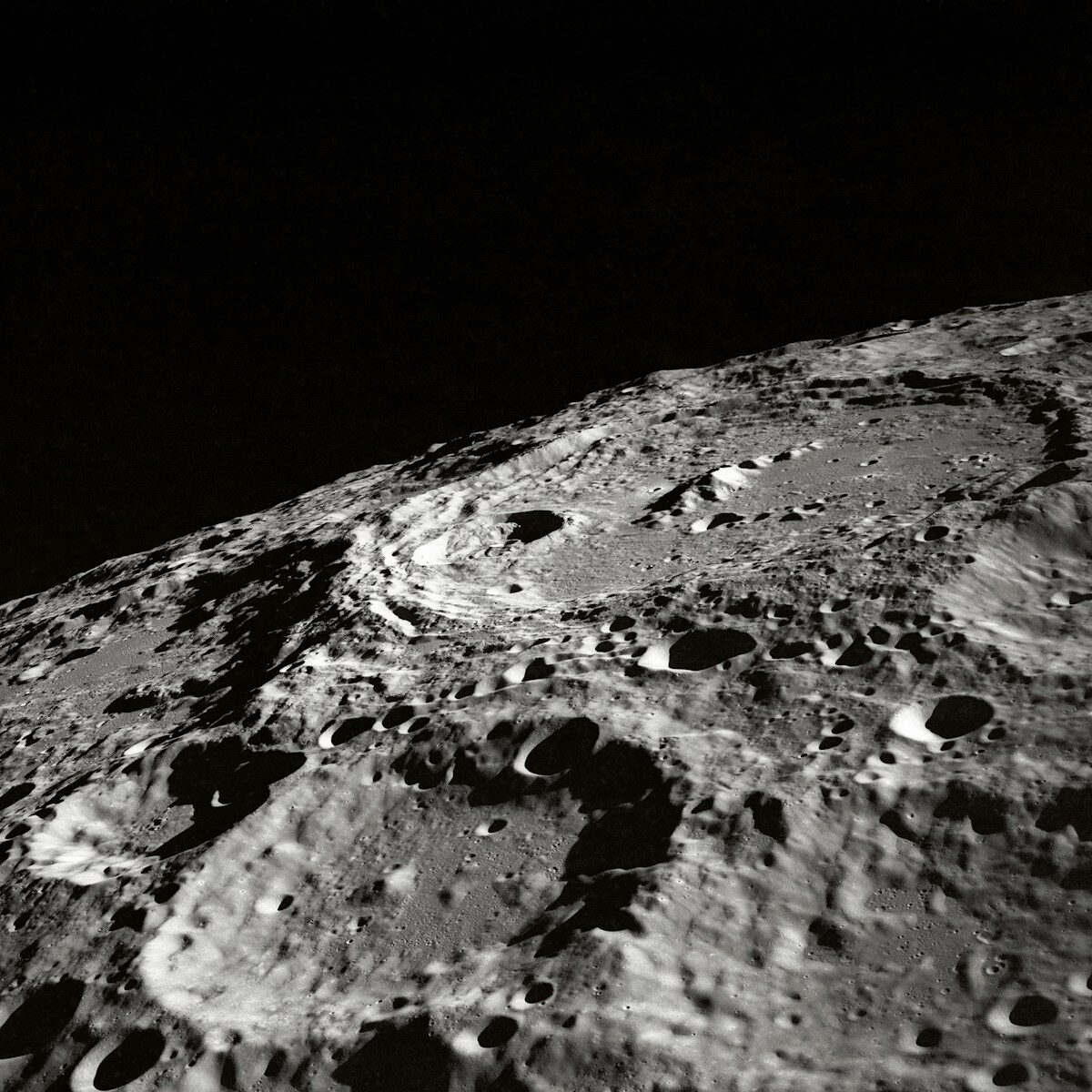
NASA has selected three new lunar investigations designed to answer practical questions that must be settled before people can work on the Moon for long periods: what hazards reach the surface, whether a known pit opens into a protective lava tube, and where usable ice may be hidden.
The agency announced the selections on 30 September through its Payloads and Research Investigations on the Surface of the Moon programme, or PRISM. NASA says the instruments are intended to travel on commercial lunar deliveries under the Commercial Lunar Payload Services initiative. Selection is an important milestone, but it is not the same as a completed flight: launch assignments, schedules and results still lie ahead.
What did NASA select?
The first suite, the Lunar Environment Monitoring Station–South Pole, is intended to operate as a long-lived environmental station. It would watch for micrometeoroids, monitor volatile material moving through the Moon’s extremely thin exosphere and use a short-period seismometer to detect moonquakes. Those measurements could help engineers judge risks to habitats, vehicles and other hardware.
A second investigation, the Geophysical Investigation for Mapping Lunar Interior, is planned for the Marius Hills Pit. Its central question is whether the visible opening connects to a larger underground lava tube. Such cavities matter because surrounding rock could provide natural shielding from radiation, micrometeoroids and large temperature swings.
The third suite, the Depth Imager with Spectral and Color Optics, will examine ice in small, persistently cold patches. NASA says it will also study surface strength and the way rocket exhaust disturbs lunar soil—two issues with direct consequences for landing zones, mobility and construction.
Why is lunar ice so important?
Water ice is scientifically valuable because its distribution can reveal how volatile compounds arrived at and migrated across the Moon. It is also a potential resource. In principle, water could support crews and be split into hydrogen and oxygen, although finding ice does not automatically make extraction practical or economical.
DISCO is therefore best understood as a reconnaissance experiment. It is meant to improve the evidence available for later engineering decisions, not to prove that a lunar fuel economy is ready.
Could lava tubes become lunar shelters?
Possible lava tubes have attracted attention because the lunar surface offers little protection from energetic radiation and small incoming objects. A confirmed void beneath Marius Hills could influence future habitat studies. Yet geometry, accessibility and structural stability would all need to be measured before anyone could call it usable shelter.
That distinction matters: GIMLI is a mapping investigation. Its result may be confirmation, a more complicated underground structure, or no extensive tube at all.
What happens next?
NASA has not presented these selections as completed missions. The payloads must be developed, tested and integrated with future commercial deliveries. The agency’s CLPS model purchases delivery services from US companies, while NASA and research teams provide instruments and science objectives.
For readers following lunar exploration, the significance is the shift from dramatic firsts toward site knowledge: soil behaviour, environmental monitoring, hidden spaces and local resources. These are less visible than a crewed landing, but they are exactly the measurements that turn an ambitious destination into an engineering problem.
What should readers watch?
The next useful details will be delivery assignments, target dates and final instrument specifications. After landing, the quality and duration of returned data will matter more than the announcement itself. A long-lived seismic and environmental station could build a record unavailable from a short visit, while ground measurements of ice could test interpretations made from orbit.
Reporting basis: This article is based on NASA’s 30 September 2026 selection announcement and its lunar science programme information. Ferdiox has separated agency goals from demonstrated results and has not assumed launch dates that NASA has not announced.
Featured image: NASA via Unsplash.