
British and American fusion laboratories have agreed to explore linking two specialist AI and supercomputing platforms, creating a shared system for training models on experimental data from both countries. The declaration signed in London on 14 September is an early-stage research partnership, not the launch of a commercial fusion power plant.
What did the UK and US laboratories agree?
The UK Atomic Energy Authority and the US Department of Energy’s Princeton Plasma Physics Laboratory signed a Joint Declaration of Intent at the Global Fusion Policy Summit. Their proposed SUNRISE–STELLAR-AI Federation would connect UKAEA’s fusion-focused SUNRISE supercomputer with PPPL’s STELLAR-AI platform.
According to the UKAEA announcement, researchers would be able to train AI models using results from both national laboratories. The collaboration would draw on experiments at the MAST Upgrade spherical tokamak in Oxfordshire and the NSTX-U facility in New Jersey.
What would the linked computers actually do?
Fusion experiments generate large, complex datasets, while future reactor designs must account for conditions that cannot all be tested directly. The partnership aims to combine experimental results with simulations so models can fill gaps, compare behaviour across machines and help engineers test design choices more quickly.
One proposed application is a digital twin: a detailed virtual representation updated with real experimental data. Researchers could use it to predict how a machine may respond before changing hardware or running a costly experiment.
Why is connecting two platforms difficult?
SUNRISE and STELLAR-AI use different computing hardware and software environments. The teams will investigate how models and computing jobs can move between them without losing reproducibility or performance. Shared data also needs consistent formats, quality controls and access rules.
AI predictions in fusion engineering must still be checked against physics, simulations and experiments. A larger dataset can improve a model, but it does not automatically make every prediction reliable outside the conditions represented in that data.
How much has the UK invested in SUNRISE?
SUNRISE is backed by £45 million of UK government funding and forms the first stage of computing infrastructure for the AI Growth Zone at UKAEA’s Culham Campus. STELLAR-AI is operated by PPPL with support from Princeton University.
The federation was announced during the Global Fusion Policy Summit, which brought government, laboratories, universities and industry together to discuss research collaboration and regulatory alignment.
Does this bring fusion power closer?
The work could shorten parts of the design and experimentation cycle, but major scientific, materials, fuel-cycle and engineering challenges remain. The declaration sets a direction for collaboration; the laboratories still have to develop the technical connection, governance and research programme.
Reporting basis: Ferdiox reviewed the UKAEA announcement and the official summit programme on 15 September 2026. Claims about future benefits are identified as aims of the partnership rather than completed outcomes.
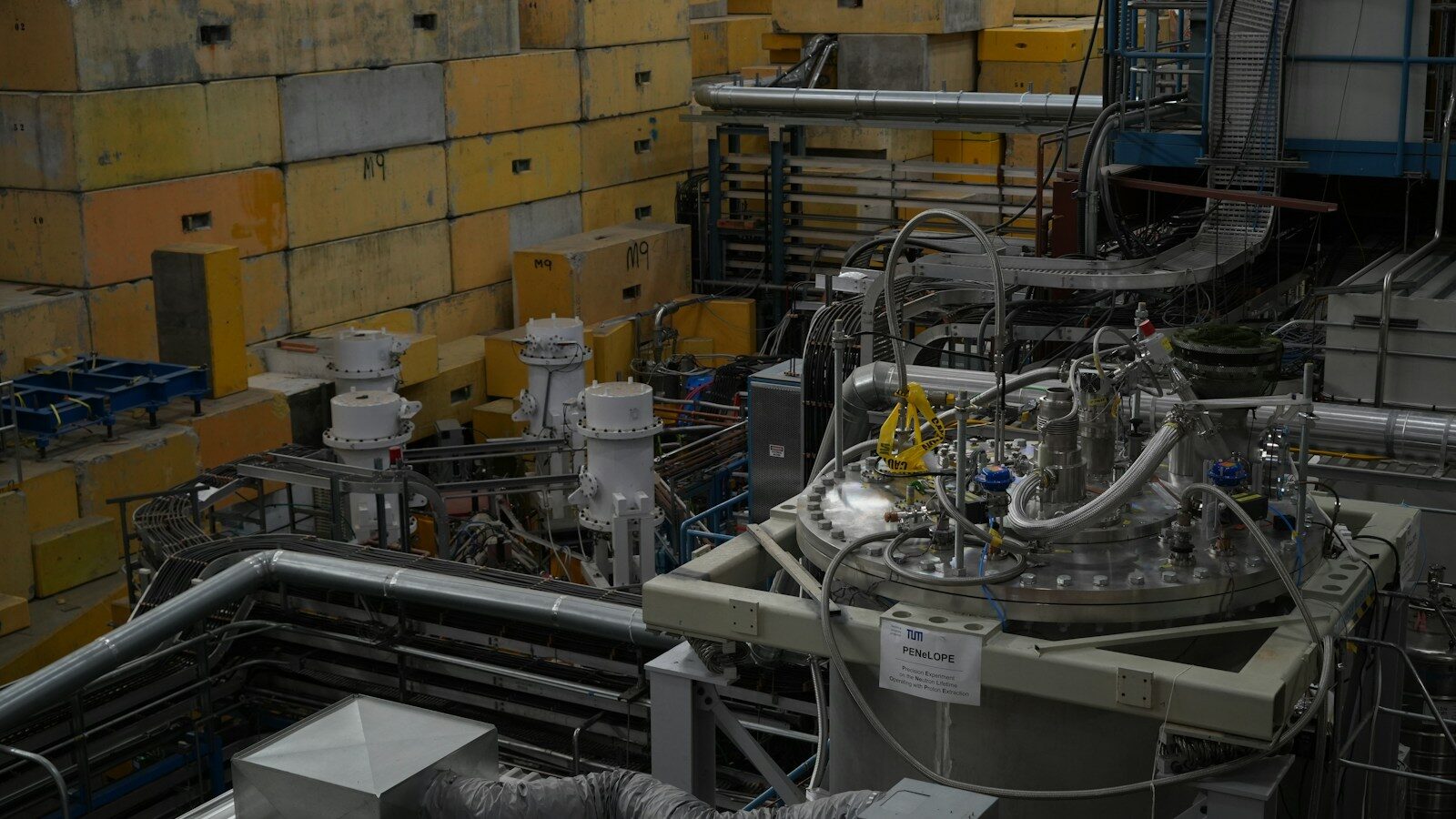
Illustrative image. Photo by Daniel Miksha on Unsplash