
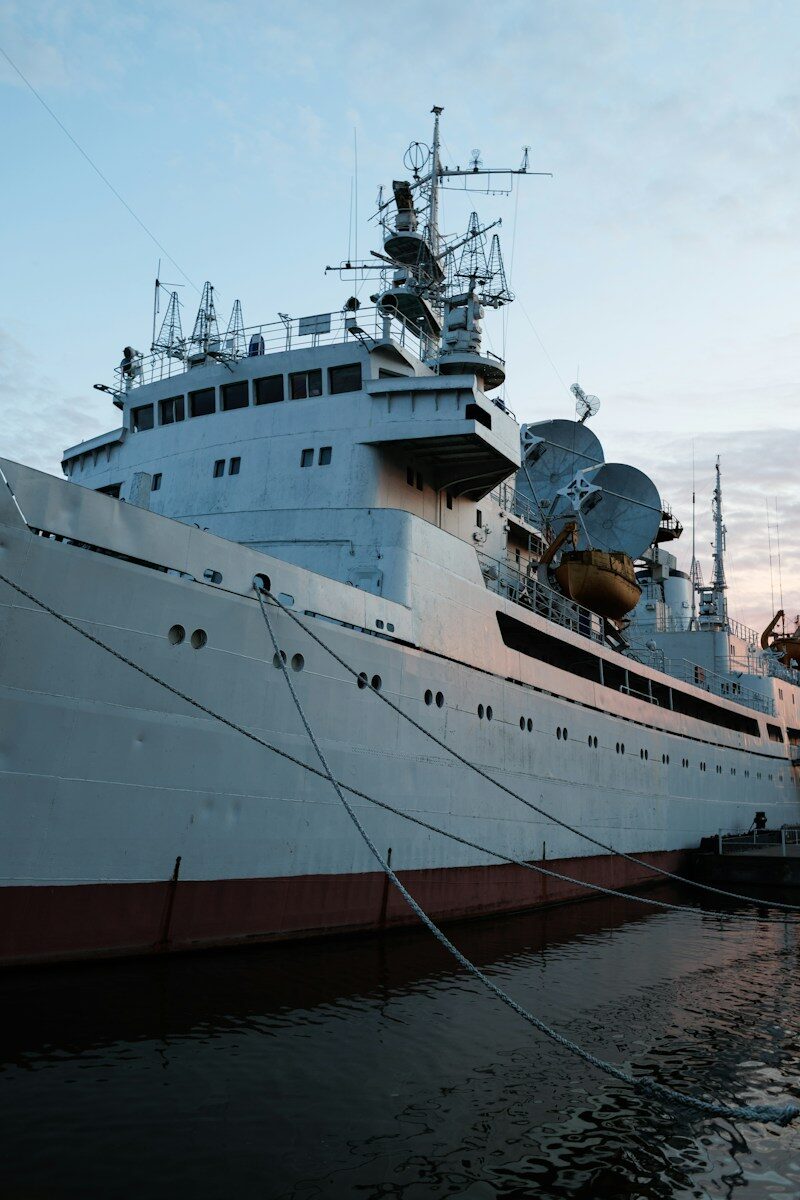
The UK government has committed to a new 85-metre ocean-research vessel intended to combine fisheries surveys, seabed mapping, pollution monitoring and rapid response to marine incidents in a single platform.
Announced on 28 September, the ship is planned as the successor to the RV Cefas Endeavour, which has supported UK marine science since 2003 and is due to retire in the early 2030s. The government says the replacement will be built in Britain and form the centre of a new national system for monitoring UK seas.
What will the new research ship do?
The vessel is intended to collect evidence used in fisheries management, marine-environment policy and incident response. Its planned work includes estimating fish stocks, mapping the seabed and measuring pollution. It will accommodate more than 40 people and carry modern survey and laboratory systems.
The announcement also points to automation, robotics and artificial intelligence. In practice, those tools could help process sensor data, deploy autonomous equipment or extend surveys beyond the ship itself. Exact systems and suppliers have not yet been announced.
Why replace the Cefas Endeavour?
Research ships have unusually long working lives, but they must support changing instruments, safety standards and emissions requirements. Planning a successor before the present vessel retires reduces the risk of a gap in time-series data used to track fish populations and environmental change.
Continuity matters. A single survey is a snapshot; repeated measurements made with understood methods allow scientists to identify trends. Transition planning will therefore need to account for differences between old and new instruments so datasets remain comparable.
How does the ship connect science and the economy?
Government figures cited in the announcement put the contribution of UK seas to the economy at more than £200 billion in 2021. Marine evidence supports decisions about fishing, offshore energy, shipping, coastal resilience and conservation—areas where incomplete information can carry economic as well as environmental costs.
Building the vessel in a UK yard is also industrial policy. The project could sustain specialist work in design, systems integration and shipbuilding, although job numbers, procurement value and the winning yard were not included in the initial release.
What does “clean fuels” mean here?
The government says the vessel will run on clean fuels, but the announcement does not specify the fuel, propulsion architecture or lifecycle emissions. Those details will be essential for assessing the claim. Research ships face a difficult design problem because they need endurance, quiet operation for acoustic surveys and power for laboratories and sensors.
A credible environmental assessment will need to cover construction, fuel production, routine operation and end-of-life—not only exhaust while the ship is at sea.
What should readers watch next?
The next milestones should include the procurement timetable, shipyard selection, contract value, design specifications and entry-into-service target. Equipment choices will show how much autonomous surveying the platform can support and whether data systems are designed for open, reusable science.
Until contracts are awarded, the project should be treated as a funded commitment rather than a finished vessel. Its scientific value will ultimately depend on reliable operations, transparent methods and long-term survey programmes.
Reporting basis: Ferdiox reviewed the joint announcement from the Department for Environment, Food & Rural Affairs and Cefas, plus Cefas information on the current research vessel. We have not inferred a cost, shipyard or delivery date that has not been published.
Featured image: Alexandr Popadin via Unsplash.